
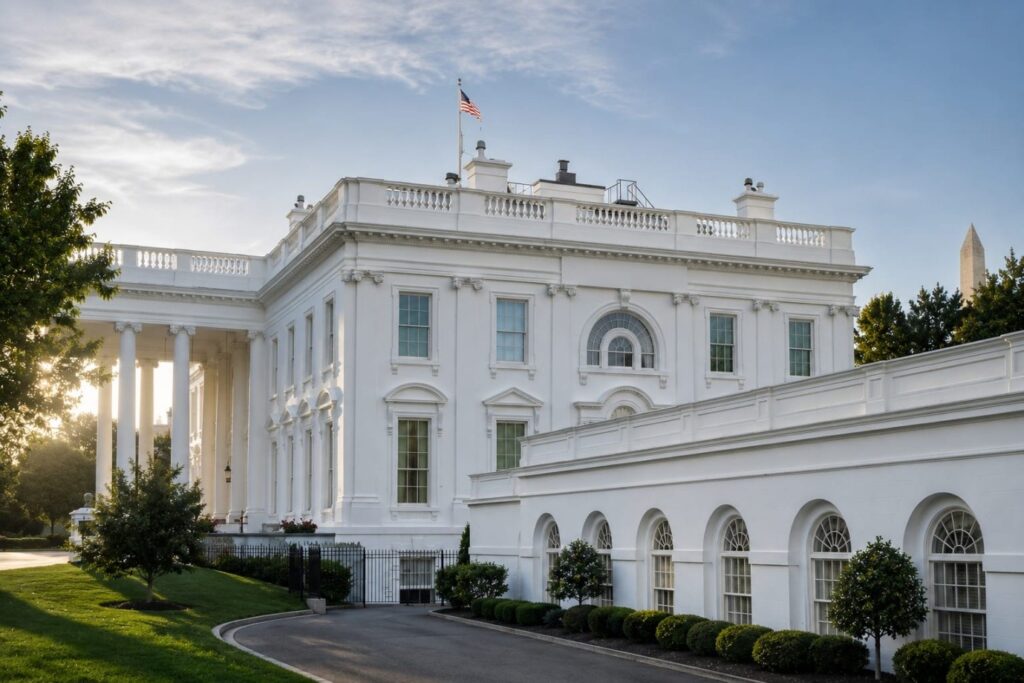
In modern American politics, few places carry as much symbolic and practical importance as the White House. Every decision made within its walls can influence domestic policy, international relations, and public trust in government institutions. While much public attention often focuses on the Oval Office and the West Wing, the East Wing has recently found itself at the center of growing legal and political discussions. What might initially appear to be a routine legal dispute has evolved into a broader debate about executive authority, government transparency, and the limits of administrative power.
The ongoing legal battle surrounding matters connected to the White House East Wing has generated significant interest among legal experts, political commentators, and citizens alike. As court proceedings continue, questions are being raised about how government offices operate, what information should be accessible to the public, and how constitutional principles should be applied in today’s political environment. Although the specific legal details are complex, the wider implications could extend far beyond the current controversy.
At a time when public confidence in political institutions is frequently tested, cases involving the White House naturally attract national attention. Supporters and critics have offered competing interpretations of the dispute, turning it into another chapter in the ongoing conversation about accountability, governance, and democratic oversight in the United States.
Why the East Wing Matters
Traditionally, the East Wing is known as the operational hub for the First Lady’s staff and various administrative functions that support the White House. While it may not receive the same level of media attention as the West Wing, it remains an important component of the executive branch. Decisions, communications, and activities associated with the East Wing can carry political significance, especially when questions arise regarding compliance with federal laws and government procedures.
The current legal challenge has drawn attention to how executive offices manage information, coordinate activities, and fulfill their responsibilities under existing legal frameworks. What began as a legal disagreement has gradually expanded into a debate about the balance between executive privilege and public accountability.
The Core of the Legal Dispute
At the heart of the controversy are questions concerning governmental authority, record-keeping practices, access to information, and the interpretation of administrative rules. Legal experts argue that the case touches on fundamental constitutional principles that have shaped American governance for generations.
Supporters of the administration maintain that executive offices require a degree of independence and confidentiality to perform their duties effectively. They argue that sensitive communications and internal decision-making processes should be protected from excessive external interference. According to this viewpoint, preserving executive discretion is necessary for ensuring efficient government operations.
Opponents, however, believe that government officials must remain accountable to the public and subject to appropriate legal oversight. They argue that transparency is a cornerstone of democratic governance and that exemptions should be applied only in limited circumstances. For critics, the legal challenge represents an opportunity to reinforce standards of accountability across all branches of government.
Political Reactions Across the Country
As expected, the legal battle has triggered strong political reactions from both sides of the ideological spectrum. Supporters of the administration describe the dispute as politically motivated and argue that legal actions are being used as tools to undermine executive leadership. They contend that government officials must be given adequate flexibility to perform their responsibilities without facing constant legal challenges.
Meanwhile, critics view the proceedings as an essential test of democratic accountability. They argue that no office, regardless of its position within the government, should operate beyond legal scrutiny. For many observers, the case has become symbolic of larger concerns about transparency, public trust, and institutional integrity.
The political divide surrounding the issue reflects a broader trend in contemporary American politics, where legal disputes often become intertwined with partisan debates. Rather than being viewed solely through a legal lens, major court cases increasingly shape public opinion and influence national political conversations.
Potential Constitutional Implications
One reason the case has attracted so much attention is the possibility that it could establish legal precedents affecting future administrations. Court decisions involving executive authority frequently influence how constitutional powers are interpreted for years or even decades.
Legal scholars have pointed out that rulings in this dispute may clarify important questions regarding executive privilege, government transparency, and access to official records. Such decisions could impact not only the current administration but also future presidents and White House officials.
Historically, disputes involving executive power have played a significant role in defining the relationship between different branches of government. Whether the courts ultimately favor broader executive protections or stronger oversight mechanisms, the outcome could shape future legal interpretations in meaningful ways.
Media Coverage and Public Perception
The media has played a major role in bringing attention to the legal proceedings. News organizations, political commentators, and legal analysts have closely followed developments, often offering differing perspectives on the significance of the case.
Public perception has been influenced not only by court filings and legal arguments but also by broader political narratives. In today’s digital media environment, information spreads rapidly across television, websites, podcasts, and social media platforms. As a result, legal disputes can quickly become national talking points.
For many Americans, the case has become part of a larger discussion about trust in government institutions. Whether individuals support or oppose the administration, the proceedings have highlighted the importance of transparency, accountability, and adherence to constitutional principles.
The Broader Impact on American Democracy
Beyond the courtroom, the dispute raises important questions about the health and resilience of democratic institutions. Democracies depend on a careful balance between effective governance and public oversight. Governments must have the ability to function efficiently, but they must also remain accountable to the citizens they serve.
The ongoing legal battle demonstrates how challenging it can be to maintain this balance. Too much secrecy can undermine public confidence, while excessive interference may hinder the government’s ability to perform its responsibilities effectively. Finding the appropriate middle ground remains one of the central challenges facing democratic systems around the world.
The case also serves as a reminder that legal institutions play a vital role in resolving disputes involving governmental authority. Courts provide a structured process through which competing interpretations of the law can be examined and evaluated.
Looking Ahead
As the legal proceedings continue, many questions remain unanswered. Appeals, additional filings, and future court rulings could significantly alter the direction of the case. Regardless of the final outcome, the dispute has already become an important moment in the ongoing conversation about executive power and democratic accountability.
Political leaders, legal experts, and citizens will continue watching closely as developments unfold. The decisions made in this case may influence how future administrations operate and how courts interpret the boundaries of executive authority.
Conclusion
The legal battle connected to the White House East Wing is about much more than a single dispute or administrative disagreement. It represents a broader examination of how power is exercised, how accountability is maintained, and how democratic institutions function in a complex political environment. As the courts work through the legal questions involved, the case is likely to remain a significant topic of national discussion.
Whether viewed through a legal, political, or constitutional lens, the controversy highlights the enduring importance of transparency, oversight, and the rule of law. Its outcome may shape not only the current political landscape but also the future relationship between executive authority and democratic accountability in the United States.