

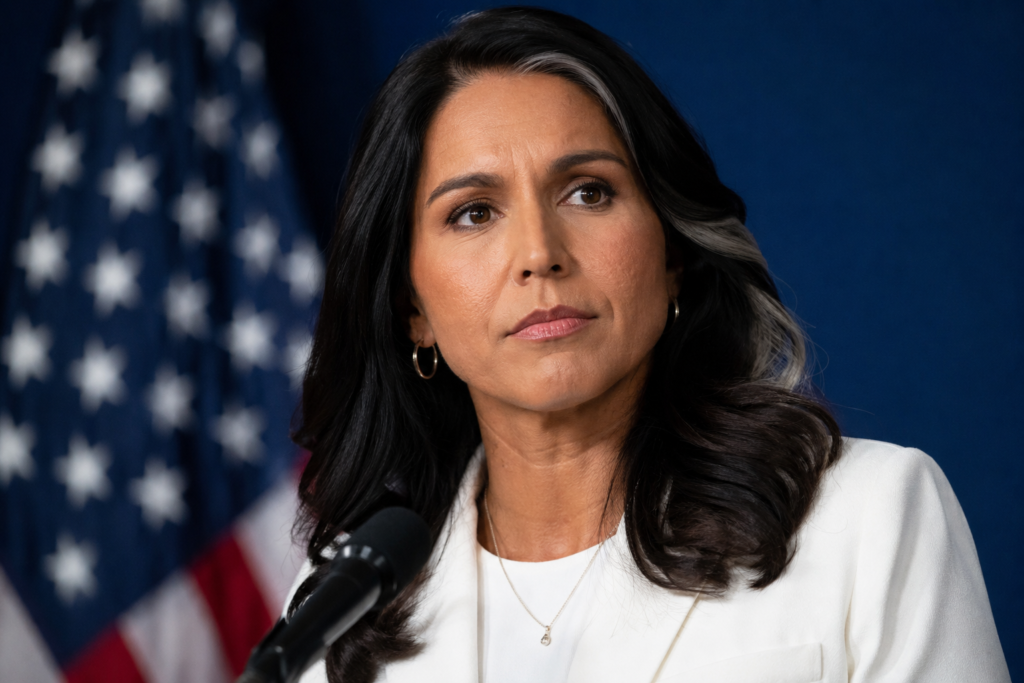
Tulsi Gabbard has remained one of the most discussed and controversial figures in modern American politics. Known for her independent views, military service, and willingness to challenge both major political parties, Gabbard has built a unique political career that has attracted supporters and critics alike. From serving in Congress to becoming the U.S. Director of National Intelligence, her journey reflects a distinctive path in American public life.
Early Life and Military Service
Tulsi Gabbard was born on April 12, 1981, in American Samoa and later grew up in Hawaii. She entered politics at a remarkably young age, winning a seat in the Hawaii State Legislature when she was just 21 years old. This achievement made her one of the youngest state legislators in American history.
Beyond politics, Gabbard dedicated herself to military service. She joined the Hawaii Army National Guard and served in Iraq, earning recognition for her work in a medical unit. Her military experience would later become a central part of her political identity and policy positions.
Rise in National Politics
Gabbard gained national attention after being elected to represent Hawaii’s 2nd Congressional District in the U.S. House of Representatives in 2012. During her time in Congress, she focused on issues such as veterans’ affairs, national security, healthcare, and foreign policy.
She became known for her independent stance and willingness to challenge party leadership. In 2016, she resigned from a leadership position within the Democratic National Committee to support Senator Bernie Sanders during the Democratic presidential primaries. This move elevated her profile among voters seeking political outsiders.
2020 Presidential Campaign
In 2019, Gabbard launched her campaign for the 2020 U.S. presidential election. Although she faced long odds against more established candidates, her campaign generated significant media attention. She emphasized ending costly foreign wars, promoting diplomacy, and reducing political polarization.
Her debate performances earned praise from supporters, particularly when she challenged other candidates on foreign policy issues. While she did not secure the Democratic nomination, the campaign increased her national recognition and expanded her political influence.
Political Evolution
One of the most notable aspects of Gabbard’s career has been her political transformation. Originally a Democrat, she increasingly criticized the party’s direction and leadership. Over time, she positioned herself as an independent voice focused on national security, civil liberties, and government accountability.
Her views often placed her at odds with both Democrats and Republicans. Supporters viewed her as a principled leader willing to challenge political orthodoxy, while critics argued that some of her foreign policy positions were controversial and unconventional.
Director of National Intelligence
A major turning point came when President Donald Trump nominated Gabbard to serve as Director of National Intelligence (DNI) in 2025. Despite debate surrounding her nomination, the Senate confirmed her, making her the eighth person to hold the position and the first Pacific Islander American and first Hindu American to serve in a Cabinet-level role.
As DNI, Gabbard became responsible for overseeing America’s intelligence community and coordinating information from 18 intelligence agencies. Her appointment drew significant attention because of her military background and nontraditional political path.
Challenges and Controversies
Gabbard’s tenure as Director of National Intelligence was marked by both accomplishments and controversy. Supporters praised her efforts to reform intelligence operations and increase transparency, while critics questioned some of her decisions and public statements.
She frequently found herself at the center of debates regarding intelligence assessments, foreign policy, and national security priorities. Political observers often described her leadership style as unconventional compared with previous intelligence chiefs.
Recent Developments
In May 2026, Gabbard announced that she would resign as Director of National Intelligence. She stated that the decision was driven by family concerns after her husband, Abraham Williams, was diagnosed with a rare form of bone cancer. Her resignation brought an end to a highly eventful period in public service.
The announcement generated widespread discussion across political circles and media outlets, highlighting both the challenges of public office and the personal sacrifices often required of national leaders.
Legacy and Future Outlook
Tulsi Gabbard remains one of the most unique figures in contemporary American politics. Her combination of military service, congressional experience, presidential ambitions, and leadership within the intelligence community has given her a distinctive place in political history.
Whether viewed as a reformer, an independent thinker, or a controversial political figure, Gabbard has consistently challenged conventional political expectations. Her career demonstrates how modern political leaders can forge paths outside traditional party structures while continuing to influence national conversations.
As she steps away from government service, many observers continue to speculate about her future role in American politics, media, or public policy. Regardless of what comes next, Tulsi Gabbard’s impact on national political discourse is likely to remain significant for years to come.