
In every election cycle, there are moments that capture the attention of an entire nation. Presidential debates have long been among the most anticipated political events in the United States, offering voters a chance to hear candidates defend their records, explain their visions, and challenge their opponents on issues that matter most. However, some debates carry greater significance than others. When the stakes are exceptionally high and the country appears deeply divided, these televised confrontations become more than political events—they become defining moments in the national conversation.
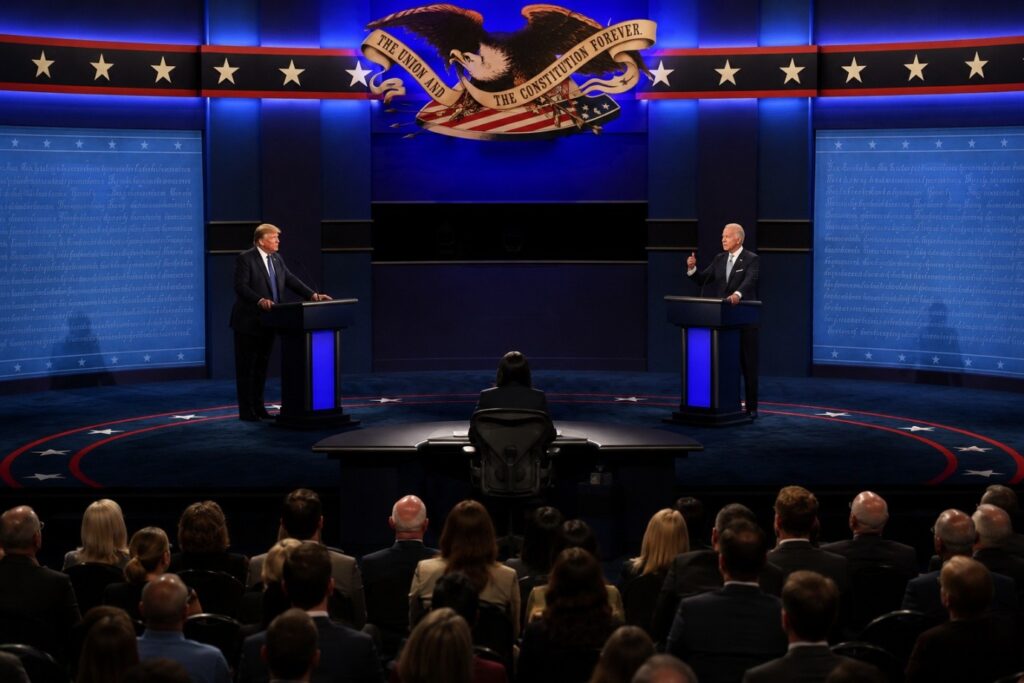
The latest presidential debate was one such moment. Millions of Americans tuned in to watch the candidates exchange arguments on the economy, national security, healthcare, immigration, and the future direction of the country. The debate unfolded against a backdrop of political polarization, economic uncertainty, and growing public concern about America’s role in an increasingly complex world.
For many voters, the event was not simply about determining who delivered the strongest performance. It was about understanding which candidate offered the most convincing vision for the future. As the candidates stood face-to-face under the bright lights of the debate stage, they were not merely competing for votes—they were competing to define the future of the United States.
A Nation at a Political Crossroads
The debate took place during a period of significant political tension. Americans remain sharply divided on a range of issues, from government spending and taxation to foreign policy and social priorities. Public trust in institutions has been tested repeatedly in recent years, and many citizens feel that the nation is moving through a period of profound change.
Against this backdrop, the presidential debate became an opportunity for candidates to reassure voters and present solutions to the challenges facing the country. Both candidates attempted to frame themselves as the leader best equipped to guide America through uncertain times.
The atmosphere reflected the seriousness of the moment. Every answer, every rebuttal, and every policy proposal carried weight because many voters remain undecided about which direction the country should take in the years ahead.
The Economy Takes Center Stage
As expected, economic issues dominated much of the discussion. Rising living costs, job creation, inflation, and government spending were among the most heavily debated topics of the evening.
One candidate argued that recent economic policies had strengthened growth, supported workers, and created opportunities for businesses. The opposing candidate countered by pointing to financial pressures faced by many households, arguing that different policies were needed to improve affordability and strengthen long-term economic stability.
The discussion highlighted the different approaches each side believes will best serve American families. While both candidates emphasized economic growth, they offered contrasting strategies for achieving it. For voters concerned about their financial future, this portion of the debate was particularly important.
The economy remains one of the most influential factors in presidential elections, and the debate demonstrated just how central economic concerns have become in shaping voter priorities.
Immigration and Border Security
Immigration emerged as another major topic during the debate. Border security, asylum policies, and immigration reform have remained at the center of political discussions for several years, making the issue impossible to avoid.
One candidate emphasized the need for stronger border enforcement and tighter controls to address illegal immigration. The other focused on balancing security measures with humanitarian responsibilities and broader immigration reform efforts.
The exchange reflected the broader national debate surrounding immigration policy. Supporters of each approach argue that their preferred strategy is necessary for protecting national interests while maintaining America’s values.
Because immigration affects economic policy, national security, and social issues, it remains one of the most politically sensitive subjects in modern American politics. The debate highlighted just how difficult it may be to find common ground on the issue.
Foreign Policy and America’s Global Role
International affairs also received significant attention during the event. With ongoing conflicts, shifting alliances, and increasing competition among global powers, foreign policy has become a major concern for many voters.
Both candidates discussed how they would approach relationships with allies, manage international tensions, and protect American interests abroad. Differences emerged regarding military strategy, diplomatic engagement, and the use of economic influence in global affairs.
Supporters of a stronger international presence argued that America must remain actively involved in global leadership. Others favored a more cautious approach, emphasizing domestic priorities and careful consideration before becoming involved in international conflicts.
The debate demonstrated that foreign policy decisions are no longer viewed as distant concerns. In today’s interconnected world, international developments can directly affect economic conditions, energy prices, and national security at home.
Healthcare and Social Priorities
Healthcare remains one of the most important issues for American voters, and the debate included extensive discussion about medical costs, insurance coverage, and healthcare accessibility.
The candidates presented competing visions for improving healthcare outcomes while controlling costs. One emphasized expanding access and strengthening existing programs, while the other focused on market-based reforms and increasing competition within the healthcare system.
Beyond healthcare, the debate touched on education, social services, and public investment. These discussions reflected broader questions about the role of government in supporting citizens and addressing social challenges.
For many viewers, these issues are deeply personal. Unlike broader geopolitical discussions, healthcare and education directly affect families, making them powerful topics during election campaigns.
The Power of Debate Performance
While policy discussions are important, presidential debates are often remembered for memorable moments, strong responses, and unexpected exchanges. Candidates are judged not only on what they say but also on how they say it.
Body language, confidence, clarity, and the ability to respond under pressure can influence public perception. Throughout the debate, both candidates sought to demonstrate leadership qualities while appealing to undecided voters.
Political analysts quickly began evaluating which candidate appeared more confident, more prepared, and more persuasive. These assessments can shape media coverage and public discussion long after the debate ends.
In close elections, even a single debate performance can influence momentum and affect voter attitudes heading into election day.
The Role of Media and Public Reaction
Within minutes of the debate ending, reactions flooded television networks, news websites, and social media platforms. Supporters of each candidate claimed victory, while analysts examined key moments and policy exchanges.
Modern debates no longer end when candidates leave the stage. Instead, they continue through online discussions, media commentary, and public analysis. Clips are shared across platforms, individual statements are scrutinized, and narratives quickly emerge about who performed best.
This extended conversation plays a major role in shaping voter perceptions. For many citizens, post-debate analysis becomes almost as influential as the debate itself.
As media organizations continue to evaluate the event, public opinion may shift depending on which moments receive the most attention.
What the Debate Means for the Election
The significance of the debate extends beyond a single evening. Presidential debates can influence campaign strategies, fundraising efforts, and voter enthusiasm. Candidates often adjust their messaging based on public reaction, while campaigns work to capitalize on strong performances or recover from difficult moments.
Although debates rarely determine election outcomes on their own, they can reinforce existing opinions or persuade undecided voters who are still evaluating their choices. In a closely contested race, even small shifts in public sentiment can have meaningful consequences.
The latest debate highlighted the sharp differences between the candidates while underscoring the importance of voter participation. As election day approaches, Americans will continue weighing the arguments presented on stage and considering which vision aligns most closely with their hopes for the country’s future.
Conclusion
The presidential debate represented far more than a televised political event. It served as a reflection of the challenges, disagreements, and aspirations shaping the United States today. From economic concerns and immigration policies to healthcare reform and foreign affairs, the candidates offered competing visions for the nation’s future.
As voters absorb the arguments and evaluate the performances, one thing remains clear: the election is about more than personalities or political parties. It is about the direction America will take in the years ahead. The debate provided a glimpse into those competing paths and reminded the nation why democratic participation remains one of the most powerful forces in shaping the future.
In a time of division, uncertainty, and rapid change, the clash on the debate stage was ultimately a clash over America’s future itself—a future that millions of voters will help determine at the ballot box.