
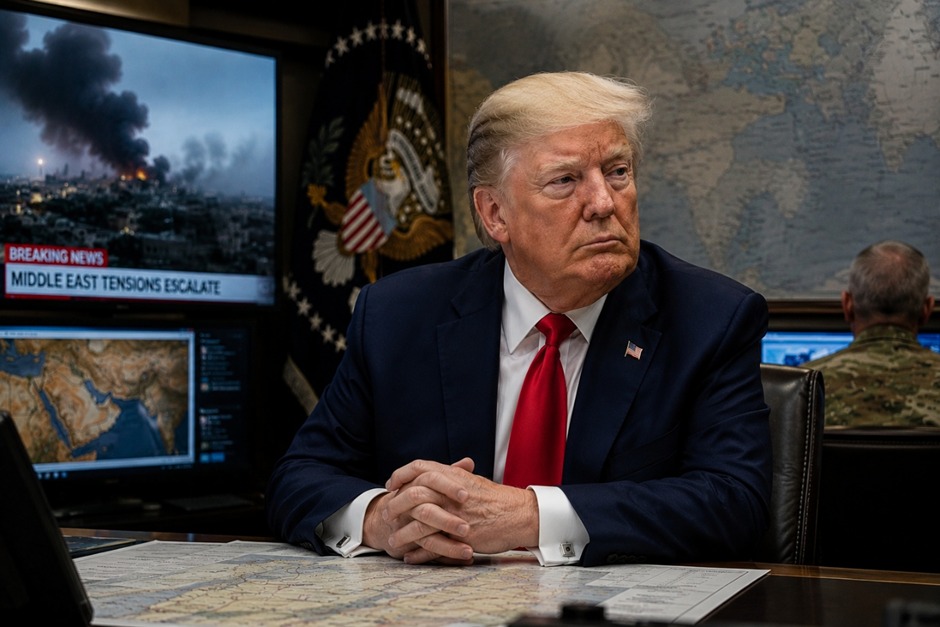
As tensions continue to rise across the Middle East, global attention has once again shifted toward international politics, military strategy, and the possibility of wider conflict in the region. Among the political figures being heavily discussed online is Donald Trump, whose name continues to appear in conversations related to foreign policy, security concerns, and America’s role in global affairs.
From television news channels to social media platforms, millions of people are following every update connected to the growing instability in the Middle East. Political analysts, journalists, and ordinary citizens are all debating how global powers may respond if tensions continue to increase. In many of these discussions, Trump’s previous policies and public statements regarding the region have once again become part of the international conversation.

Rising Tensions Across the Middle East
The Middle East has remained one of the world’s most politically sensitive regions for decades. Any conflict involving powerful nations quickly attracts worldwide attention because the effects often extend beyond one country or one border.
Recent developments have increased fears about regional instability, military escalation, and growing uncertainty about the future. News reports discussing security threats, political disagreements, and international reactions have spread rapidly across digital platforms, making the situation one of the most talked-about global issues today.
For ordinary people living in affected areas, the tension is more than just headlines. Families worry about safety, businesses fear economic uncertainty, and communities remain anxious about what could happen if the situation becomes more serious.
Why Donald Trump Is Being Discussed Again
Even after leaving office, Donald Trump remains one of the most influential and widely discussed political figures in the world. Whenever major international issues emerge, many people revisit his previous foreign policies and compare them with current global events.
Trump’s approach toward the Middle East during his presidency often focused on strong political pressure, economic sanctions, and aggressive diplomatic strategies. Supporters believe his policies projected strength and created leverage in international negotiations, while critics argue that some decisions increased long-term tensions in the region.
As new developments continue to unfold, social media users and political commentators frequently reference Trump’s past decisions, speeches, and leadership style while discussing the current crisis.

Social Media and Global Reactions
Modern conflicts no longer stay limited to television broadcasts. Today, social media platforms such as Instagram, X, TikTok, Facebook, and YouTube have transformed global events into real-time digital conversations.
Videos, breaking news clips, political reactions, and opinion posts related to the Middle East crisis are receiving millions of views every day. Trump-related content is also trending heavily online, with supporters and critics both sharing opinions about America’s role in the region.
Some users praise strong leadership and decisive action, while others call for diplomacy, peace, and reduced international tensions. The internet has essentially become a nonstop discussion platform where political debates continue around the clock.
However, alongside genuine reporting, misinformation also spreads rapidly during major global events. Edited videos, false headlines, and unverified rumors often create confusion and panic, making reliable information more important than ever.
The Fear of a Wider Conflict
One of the biggest global concerns right now is the possibility of the crisis expanding into a larger regional conflict. Experts warn that if tensions continue to rise, multiple countries could become involved directly or indirectly.
The Middle East plays a major role in global oil production, trade routes, and international security. Because of this, instability in the region can quickly affect fuel prices, financial markets, international travel, and political relationships worldwide.
Governments and international organizations continue urging restraint and peaceful dialogue in hopes of preventing further escalation. Many leaders understand that another large-scale conflict in the region could create long-term economic and humanitarian consequences affecting millions of people.
Political Pressure and Global Attention
The current situation has also placed enormous pressure on political leaders around the world. Every statement made by major governments is being analyzed closely by media organizations and international observers.
Donald Trump’s name remains part of this conversation because of his continued influence in American politics and his strong public image regarding international affairs. Whether people support or criticize him, there is no denying that he continues to shape political discussions globally.
Many analysts believe that future political leadership decisions in the United States could significantly influence how America approaches Middle East tensions in the coming years.
Human Impact Beyond Politics
Although political debates often dominate headlines, ordinary people are usually the ones most affected during times of international crisis. Rising fear, economic uncertainty, emotional stress, and concerns about safety become part of daily life for millions of families.
Communities living near conflict zones face the greatest anxiety, but even people in distant countries feel the effects through economic instability, rising prices, and constant exposure to distressing news coverage.
This is why many voices across social media and international organizations continue emphasizing peace, diplomacy, and human safety above political rivalry.
Conclusion
The growing Middle East crisis has once again placed global politics under intense international focus. As tensions rise and uncertainty spreads, discussions surrounding Donald Trump, American foreign policy, and regional stability continue dominating headlines and online conversations.