

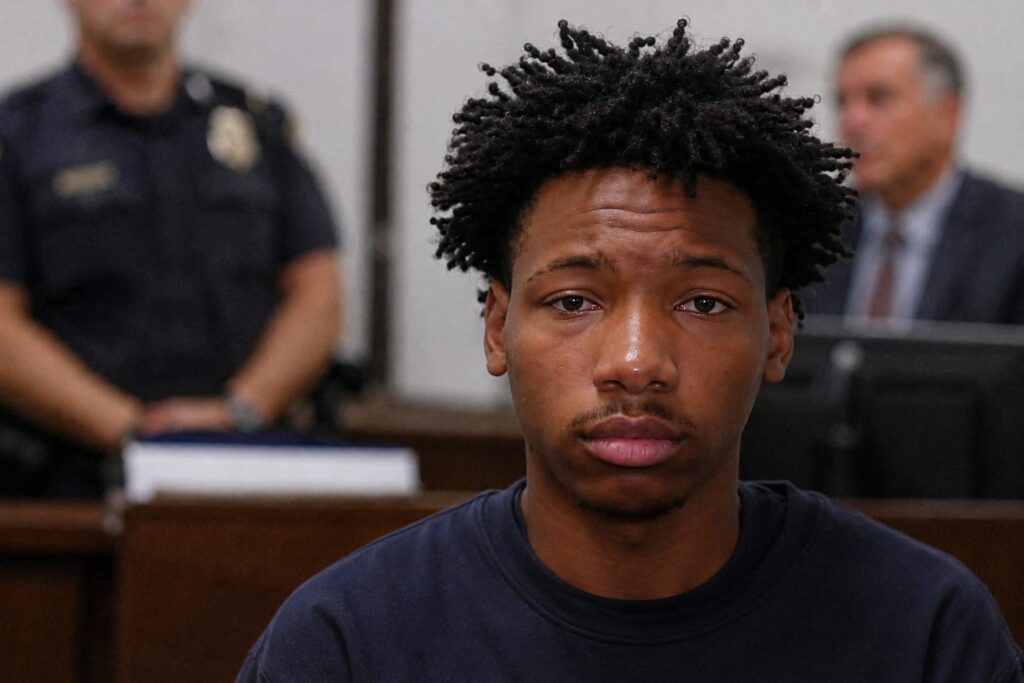
The murder trial of Karmelo Anthony has become one of the most closely watched criminal cases in recent Texas history. The case attracted national attention because it involved two teenagers, a fatal confrontation at a high school sporting event, and intense public debate surrounding self-defense laws, race, school safety, and justice. After days of testimony and emotional courtroom proceedings, a Texas jury found Anthony guilty of murder in the death of fellow student Austin Metcalf and sentenced him to 35 years in prison.
The verdict has generated strong reactions across the country. Some believe the jury reached the correct decision based on the evidence presented during the trial, while others continue to question aspects of the case and the broader issues it raised. Regardless of where public opinion stands, the tragedy has left two families forever changed and has sparked important conversations about youth violence, conflict resolution, and accountability.
The Incident That Shocked Texas
The case stems from a deadly confrontation that occurred on April 2, 2025, during a high school track meet in Frisco, Texas. Students from several schools had gathered for athletic competitions when an argument broke out under a team tent during rainy weather. According to testimony presented during the trial, Anthony was sitting under a tent designated for another school’s athletes when a dispute began between him and Metcalf.
Witnesses stated that Metcalf and others asked Anthony to move from the area. What began as a verbal disagreement quickly escalated. Prosecutors argued that Anthony responded to the confrontation by pulling out a knife and stabbing Metcalf in the chest. The wound proved fatal, and despite emergency medical efforts, Metcalf later died from his injuries.
The shocking nature of the incident immediately drew widespread attention. Both teenagers were only 17 years old at the time, and many people struggled to understand how a disagreement during a school sporting event could end in the loss of a young life.
Investigation and Arrest
Law enforcement officers responded quickly to the scene. Anthony was taken into custody shortly after the stabbing. Authorities launched an extensive investigation that included witness interviews, video evidence, police reports, and forensic analysis.
Throughout the investigation, Anthony’s legal team maintained that he acted in self-defense. According to the defense, Anthony feared for his safety during the confrontation and reacted to what he perceived as a threat. Prosecutors strongly disagreed, arguing that the evidence showed an unjustified use of deadly force against an unarmed teenager.
As details emerged, the case gained significant attention on social media and national news outlets. Public discussions often extended beyond the legal facts and touched on broader issues such as race, school security, and the responsibilities of young people during conflicts.
The Trial Begins
The trial officially began in 2026 and quickly became one of the most closely followed court proceedings in Texas. Reporters, legal analysts, and members of the public closely monitored every stage of the case.
During the proceedings, prosecutors presented witness testimony describing the moments leading up to the stabbing. They argued that Anthony knowingly and intentionally used deadly force during a dispute that did not justify such an extreme response. Prosecutors described the killing as a preventable tragedy resulting from a decision that changed multiple lives forever.
The defense, meanwhile, focused on the claim of self-defense. Attorneys argued that Anthony felt threatened during the encounter and acted out of fear. They emphasized the chaotic circumstances surrounding the confrontation and attempted to persuade jurors that Anthony believed he needed to protect himself.
Jurors heard testimony from witnesses, investigators, and experts as they evaluated competing versions of what happened beneath the tent that day.
The Self-Defense Argument
One of the most important aspects of the trial centered on Anthony’s claim of self-defense. Texas law allows individuals to defend themselves under certain circumstances, but the use of deadly force must meet specific legal standards.
Defense attorneys argued that Anthony feared imminent harm and therefore reacted to protect himself. They maintained that his actions occurred during a rapidly escalating confrontation and should be viewed within that context.
Prosecutors challenged this argument throughout the trial. They contended that Metcalf was unarmed and that the circumstances did not justify the use of a knife. According to prosecutors, the evidence showed that Anthony escalated the situation rather than attempting to avoid violence.
Ultimately, jurors rejected the self-defense claim. Their verdict indicated that they believed the prosecution had proven beyond a reasonable doubt that Anthony committed murder rather than acting lawfully to defend himself.
Jury Deliberations and Verdict
After hearing all testimony and closing arguments, the jury began deliberations. Observers anticipated that the decision might take days given the complexity and publicity surrounding the case.
Instead, jurors reached a decision relatively quickly. After only a few hours of deliberation, they returned a guilty verdict, finding Anthony responsible for murder. Reports indicated that jurors rejected alternative interpretations presented by the defense and concluded that the evidence supported the prosecution’s case.
The courtroom became emotional as the verdict was announced. Family members from both sides reacted visibly to the outcome. The verdict marked a significant turning point in a case that had captured national attention for more than a year.
Sentencing Decision
Following the guilty verdict, the trial moved into the sentencing phase. Jurors were tasked with determining how much prison time Anthony should receive.
Prosecutors sought a substantial sentence, emphasizing the seriousness of the crime and the devastating consequences for Metcalf’s family. Defense attorneys requested leniency and highlighted Anthony’s age at the time of the offense. Family members also addressed the court, sharing emotional statements about the impact of the tragedy.
After considering the evidence and testimony, the jury sentenced Anthony to 35 years in prison. Because he was a minor when the crime occurred, certain sentencing limitations applied under Texas law. He will become eligible for parole after serving a significant portion of the sentence.
The sentence reflected the jury’s belief that the crime warranted serious punishment while also recognizing legal requirements related to juvenile offenders.
Impact on the Families
Behind every headline and courtroom proceeding are two families dealing with unimaginable circumstances.
The Metcalf family has spoken publicly about the profound loss of a son, brother, and student whose future was suddenly taken away. During victim impact statements, family members described the emotional pain they continue to experience and their desire for justice.
At the same time, Anthony’s family has expressed sorrow over the outcome and concern for his future. Throughout the trial, relatives described him as a young man whose life has also been permanently altered by the events of that day. His family has indicated plans to continue pursuing legal options through the appeals process.
The tragedy demonstrates how a single moment can have consequences that extend far beyond those directly involved.
National Debate and Public Reaction
The case generated intense discussion across the United States. Supporters of the prosecution viewed the verdict as an appropriate response to a violent act. Others questioned aspects of the investigation, trial, and sentencing process. The case also sparked conversations about race, media coverage, and perceptions of justice within the criminal legal system.
Social media amplified these debates, often turning the case into a broader cultural discussion. Public figures, activists, legal commentators, and ordinary citizens shared opinions that sometimes reflected sharply different perspectives.
Despite these disagreements, many observers agreed on one point: the death of a teenager during a school event represents a heartbreaking tragedy that should never have occurred.
Looking Ahead
Although the verdict has been delivered, the legal process may not be entirely over. Anthony’s attorneys have already indicated that they intend to pursue an appeal, arguing that legal issues raised during the trial deserve further review. Appeals are common in serious criminal cases, and the process could continue for years.
Meanwhile, communities across Texas continue reflecting on the lessons of the case. Educators, parents, and students have discussed ways to prevent violence, improve conflict resolution skills, and create safer environments at school events.
Conclusion
The conviction of Karmelo Anthony closes one chapter in a case that has deeply affected families, communities, and observers across the nation. What began as a disagreement at a high school track meet ended in the loss of a young life and a prison sentence that will shape another young life for decades. The jury’s decision to find Anthony guilty of murder and impose a 35-year sentence reflects its conclusion that the evidence did not support a claim of self-defense.
As appeals move forward and public debate continues, the memory of Austin Metcalf remains at the center of the story. The case serves as a sobering reminder of how quickly conflicts can escalate and how irreversible the consequences of violence can be. For many people, the lessons from this tragedy will continue to resonate long after the courtroom proceedings have ended.